Trapped by the Room, the Mirror, and the Feed
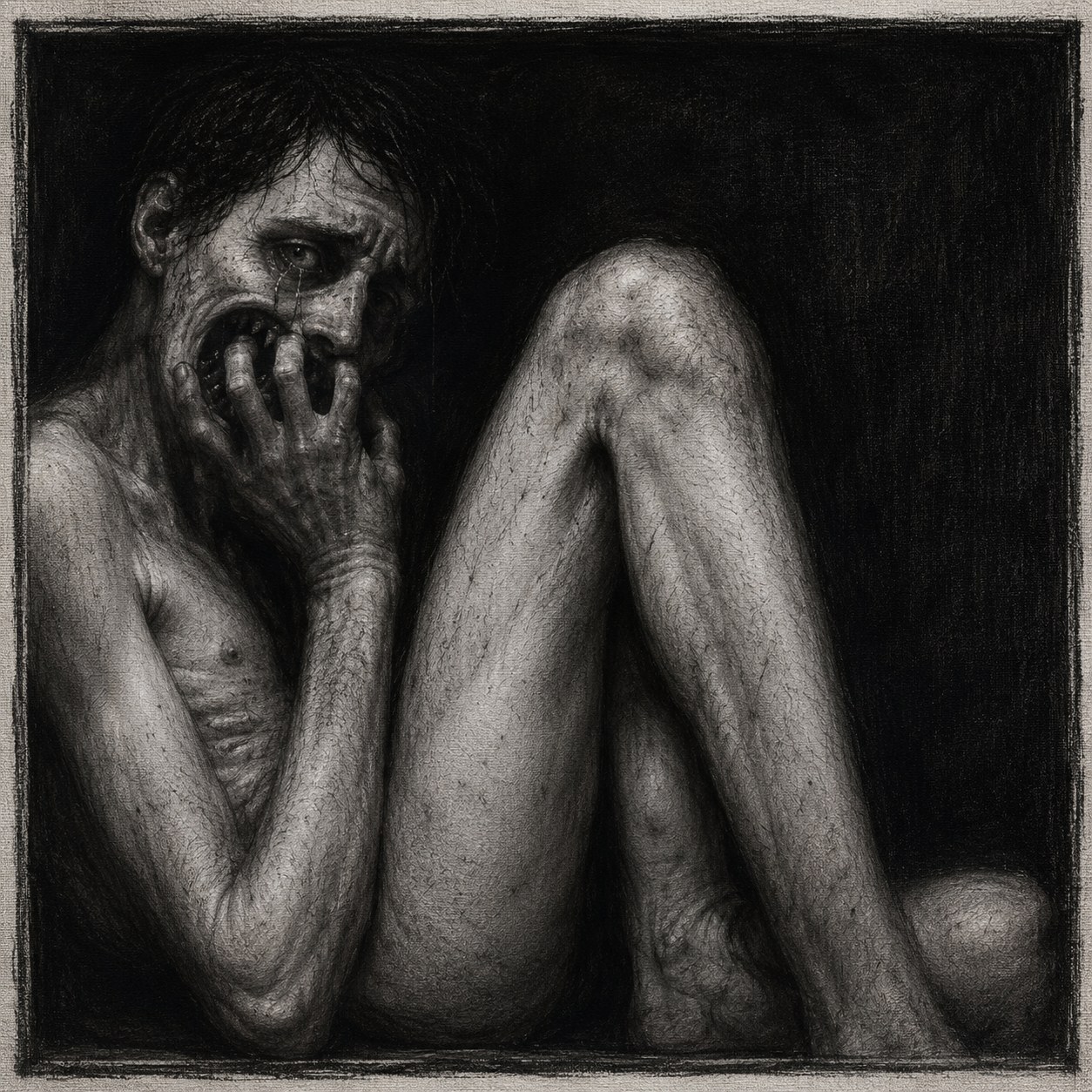
Feeling trapped is not always a dramatic thing with iron bars, thunder, and a villain in a black coat. Sometimes it is a plastic chair, a hot room, a half-charged phone, yesterday’s tea cup, and your own face in the mirror looking back as if it has read the audit report and found serious irregularities.
That is the embarrassing part. The door may be open.
Still, you cannot leave.
Not because a policeman is outside. Not because society has chained you to the bedpost with British-era handcuffs. But because the past is sitting on your chest like an elderly uncle after lunch, the present is demanding documents in triplicate, and the future is standing at the window making faces.
We think prison is a place. Often it is a tense arrangement between memory, fear, body chemistry, unpaid bills, old shame, and one badly timed WhatsApp message.
The past traps us first. Childhood, insults, failures, broken love, missed chances, bad decisions, family wounds, school humiliations, office humiliations, the whole shabby museum. You do not even have to visit it. It visits you. It comes in without knocking, opens the fridge, sits on the cot, and says, “Remember me?”
The present traps us next. Money is short. Health is unpredictable. Relationships are complicated. The room is messy. The body is older. Work is uncertain. The ceiling fan makes that little grinding sound which suggests it too has lost faith in the Republic.
And then comes the future, the most shameless fellow of all. It has not happened yet, but it behaves like a confirmed booking. Anxiety loves the future because the future cannot defend itself. You can paint any monster there and nobody can prove you wrong at 3:17 in the morning.
In my own case, bipolar depression and anxiety add a crooked lens to the whole business. This is not poetry. It is a practical inconvenience of the first order. The mind is the instrument with which I judge reality, and sometimes the instrument itself is badly tuned. Imagine weighing fish at the market with a scale that is secretly emotional. One moment the hilsa is 800 grams. Next moment it is the end of civilization.
That is what a distorted inner world feels like.
A small worry becomes prophecy. A tired face becomes evidence. Silence from someone becomes rejection. A normal day becomes a court case. A room becomes a country. A bed becomes a border.
Some days I cannot step out of my room. From outside, this looks absurd. From inside, it has architecture.
People say, “Go for a walk.”
A fine suggestion. Also useless on the wrong day. Like telling a drowning man to enjoy the minerals in the water.
The problem is that trappedness has degrees. One person is trapped by trauma. Another by addiction. Another by debt. Another by caste, class, family, marriage, illness, loneliness, or a brain that behaves like a municipal office during a strike. Some are trapped in a crowded house. Some in a quiet flat. Some in a marriage photo where everyone is smiling except the soul. Some in a job that pays well but eats the person slowly, like damp eating a wall.
And here is the funny, unfunny thing: you can be doing well and still be trapped.
I know this.
I have felt trapped in crowds. I have felt trapped while speaking properly, dressing properly, answering politely, looking functional, and passing society’s cheap little tests. Society is easily fooled. Give it a shirt with buttons, a few English sentences, and a bank message that does not say “insufficient funds,” and it will declare you stable.
Inside, meanwhile, the furniture may be on fire.
The mirror worsens it. The mirror is not glass. It is a gossip columnist with lighting. It shows age, fatigue, weight, eyes, hair, the small collapse around the mouth, the unromantic geography of middle age. At 51, you do not look into the mirror as much as negotiate with it.
“Be fair,” you say.
The mirror says nothing.
That is how it wins.
Then come people. Good people, bad people, half-good people, affectionate people who injure you with concern, successful people who injure you by existing. Family can trap. Friends can trap. Neighbors can trap. Even kindness can trap when it arrives with expectation folded inside it like a hidden service charge.
And then social media arrives, wearing perfume and carrying a knife.
There everyone is glowing. Everyone is travelling. Everyone has found purpose, discipline, love, abs, a podcast, a startup, a mountain, a dog, a therapist, a morning routine, and a plate of food photographed from above like a police raid. Meanwhile you are in the outskirts of Calcutta, sweating through a vest, trying to decide whether the electricity bill can wait two days without becoming a Greek tragedy.
You scroll.
Bad idea.
But you scroll.
This is modern life’s small genius. It gives you a window, then turns the window into a measuring tape. You do not merely see other lives. You measure your life against them. Their holiday against your room. Their promotion against your consulting income. Their smiling couple photograph against your evening tea and two Marie biscuits. Their artificial brightness against your real nervous system.
No contest. The fake life wins because it has better lighting.
Modern life is sold to us as freedom, but much of it feels like a bazaar where every stall is shouting at the same time. Buy this. Improve that. Fix yourself. Brand yourself. Heal yourself. Monetize your sadness. Turn your breakfast into content. Turn your pain into engagement. Turn your face into a thumbnail.
A human being was not designed for this. We are soft animals with digestion, memory, knees, shame, and a dangerous fondness for fried things. Yet we are expected to behave like apps: always updated, always available, always optimized, never crashing.
Naturally we crash.
Now the artificial world has acquired a new voice. The LLM speaks smoothly. Very smoothly. Like an English-medium insurance agent who has read philosophy.
Let me be clear: these tools can be useful. I use them. I am not standing in the courtyard waving a lantern against electricity. But there is a catch, and the catch is not small. When a person is lonely, anxious, depressed, or desperate for certainty, a fluent machine can become dangerously persuasive.
It answers instantly.
Humans do not.
It sounds calm.
Humans are busy, irritated, tired, or eating muri.
It does not roll its eyes.
Humans sometimes do.
So a person begins to trust it. First for grammar. Then for advice. Then for emotional interpretation. Then for judgment. Then for the meaning of an entire life.
This is where the floor tilts.
An LLM can be useful without being wise. It can be fluent without being true. It can sound sympathetic without understanding suffering. It can generate comfort the way a ceiling fan generates air: mechanically, steadily, and with no idea who is sitting underneath.
That does not make it evil. It makes it dangerous in a very modern way. Not like a tiger. Like sugar.
The old dystopias imagined boots, police, ministries, slogans, injections, and loudspeakers. Our version is quieter. Brave New World meets 1984, but with push notifications and a friendly chatbot asking, “Would you like to explore that feeling?”
Yes, perhaps.
But with suspicion.
Always with suspicion.
Because a trapped mind is hungry for confirmation. If I think I am worthless, I may search for evidence. If I think the future is finished, I may collect proof. If I think everyone has gone ahead and I have remained behind, the internet will happily provide a full documentary series, with bonus clips.
The machine may not intend harm. The feed may not intend harm. The mirror may not intend harm. The family may not intend harm.
Still, the cage forms.
That is the real horror. No single villain. Only many small assistants.
Memory contributes a brick. Anxiety contributes cement. Social comparison brings paint. The phone installs lighting. The LLM offers commentary. The body locks the gate from inside.
And there you are.
Now, what is the solution?
Here I must disappoint the motivational industry. There is no clean solution wrapped in a quote and set against a sunrise. “Believe in yourself” is fine if the self is currently available for consultation. Some days the self has gone missing, possibly near Howrah, with no forwarding address.
The honest answer is smaller.
Sometimes you do not escape the prison. You ventilate it.
You open the window. You drink water. You step into the lane for two minutes and come back. You do not confuse one terrible thought with a constitutional amendment. You ask whether the mind is reporting reality or producing weather. You speak to a real human when possible, even if the conversation is clumsy. You treat the phone as a tool, not a temple. You treat the LLM as a clever assistant, not a conscience. You distrust all voices that sound too certain, including your own at night.
Especially your own at night.
The trapped feeling is complicated because it is partly real and partly manufactured. The bills may be real. The illness may be real. The loneliness may be real. The fear may be exaggerated. The shame may be counterfeit. The prediction may be nonsense wearing a serious moustache.
Sorting these is hard work. Not glamorous work. Not Instagram work. More like cleaning a kitchen after a storm has entered through the window and cooked fish curry badly.
But even that is work worth doing.
Because the room is not always the whole world. The mirror is not a judge. The feed is not society. The future is not yet evidence. The machine is not an oracle. The mind is not always a reliable narrator, though it speaks in your own voice and therefore gets special permission to misbehave.
Maybe freedom does not begin with a grand exit.
Maybe it begins with catching one thought by the collar and saying, “Wait. Who sent you?”
That is not liberation.
Not yet.
But it is a crack in the wall.
And through cracks, as every old Calcutta house knows, impossible things enter: damp, ants, noise, dust, light.
Sometimes even air.